I may potentially be preaching to the choir here, so if you’re already aware and practicing, feel free to move on.

We live in an attention economy. A marketed economy. An economy that is built to encourage us to consume. In such an economy, increased awareness and control of our attention is critically important. Unfortunately, though the process is simple to understand, gaining and maintaining agency of our awareness and attention requires regular, ongoing practice. Our brains developed over millions of years to be drawn to what is out-of-place, enabling our species to survive a plethora of physical dangers. Sadly, this has been taken advantage of in various ways to hijack our attention.

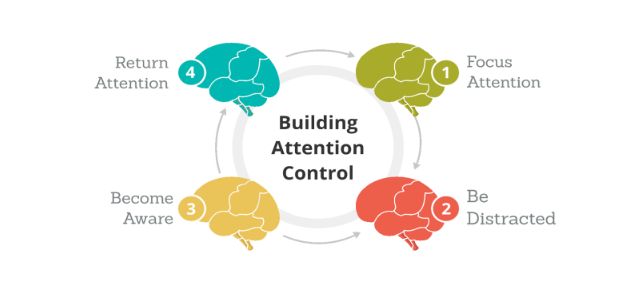
I invite, even encourage, practicing this simple process 3-5 minutes each day, maybe a few times a day. The most common anchor for focusing attention is the breath. Just observe it coming in and going out. And when you lose focus – which is inevitable, so no judgment whatsoever – simply return to observing the anchor, typically your breath, again, and again, and again. In the same way repetition builds physical muscle, it also builds mental capacity.

This practice creates space that allows us to respond rather than simply react. Reaction in physical danger was and is a benefit. Social dangers, however, require response-ability.

I have come to observe just how much US society revolves around an apparent obsession with power. It is craved and otherwise admired, even coveted. So much so that we seem to conflate it with leadership. As in, that person has power, let’s put them in charge! And how’s that worked out for us, ever?

Though power, and the ability to understand and temper it in a variety of forms, is an aspect of leadership, power is not leadership’s equal. And we do a disservice to all involved when anyone promoted is unprepared to wield the power granted. In fact, it would be beneficial if all employees regardless of promotion potential were granted opportunities to develop essential skills often reserved for those who are promoted to positional power:

  • Self-Awareness
  • Emotional Regulation/Intelligence
  • Effective Communication
  • Integrity and Accountability
  • Power Dynamics
  • Adapting to Change
  • and others

Because these are all essential skills to being an effective human not just an effective leader. And since these take time and social interaction to develop, that development needs to start well before, and should be a prerequisite for, promotion. More employees with these skills means better recognition of them which can lead to better workplaces. Plus, being commutable, who doesn’t want better neighborhoods and communities to boot?

Know better. Do better. Be better.

I have heard an enormous amount of news running about the eoncomic crisis. This week, I have heard about Greece, the EU in general, the US housing situation, our national debt, to name a few. I take the perspective that money must be well-managed though not the goal of what we do. How many of us hold a job in which we are anything from mostly to completely unsatisfied just to make a buck?

One of my more recent posts had to do with the creation of our reality. Our economy is one thing I believe is pure creation on our part, a necessary creation, but a human creation all the same. For this reason, I can’t help but wonder, what is it we are missing? What is the lesson to be learned? If not for money, why do we exist?

Well, I tend to put value in the idea of trustful relationships. If we are building these, it is my experience, and many others I have read, that the money to be managed well comes when are doing what satisfies us and building trustful relatinonships in the process. It is troubling to me that those I believe are essentially gamblers, whose focus is obviously on the accumulation of money, have indulged their habits in the economy, only to weaken it for everyone. Speculations on our housing and oil markets are top of mind.

This is not to say that anything we do with regard to money is wrong or bad on the whole. It might just serve us well, though, to check our involvement with money, with what we do and why we do it, and the relationships we build in our lives. If money is at the top of our priorities, well, it’s up to each of us to make that choice.

I’ve been pondering for some time now, since my Global & International OD class at Benedictine back in March, the first of four key principle’s of Confucius’ “pragmatic rules for daily life derived from Chinese history.”  (Hofstede, Cultures & Organizations: Software of the Mind, p. 208)  It reads:

The stability of society is based on unequal relationships between people.  …[Confucius] distinguished five basic relationships (the wu lun):  ruler-subject, father-son, older-brother-younger brother, husband-wife, and senior friend-junior friend.  These relationships are based on mutual and complementary obligations: for example, the junior partner owes the senior partner respect and obedience, and the senior owes the junior partner protection and consideration.

I have to admit that the concept, what I’ve always known of it and upon initial readings, left me rather uncomfortable.  The word “obedience” leaves me cold to be honest.  So, I’ve re-read and re-read and pondered and soul searched, and something has occurred to me.  But first, let me mention that there are those, plenty I’m sure, and including my mother who will say – something to the effect of – “We had respect for our elders back when I was growing up.  It was the me generation that screwed everything up and now children no longer respect their elders.”

Ok.  So I’m not sure how prolific this disrespect is though it is certainly perceived.  Here’s the thing that has struck me.  Reading the last half of the last sentence is of incredible importance, because like others, I get hung up on the respect and obedience of elders bit.  Let me reiterate:  the senior owes the junior partner protection and consideration.  I really think this should come first because if we think of the parent child relationship, the older should be the wiser and should give the protection and consideration that would stir the respect and obedience Confucius obviously observed in healthy working relationships.  And this, I feel, is where the respect broke down, culturally and in the broadest sense for us here in the US, and perhaps in broader Western societies.

Consider the breakdown of the closeness of our extended families.  With this breakdown toward nuclear families, parents lost a natural source of learning to be a parent from experienced, knowledgeable and wise older family members.  We are left to figuring it out amongst ourselves, by trial and error, over the internet and through reading of books.  As humans, though we have the capacity to learn visually and aurally, we forget that we are foundationally kinesthetic learners who learn at first, and throughout life at the core, through mimicry.  So, without models, we lost what it means to protect and consider our children, or junior roles.  What I get is that consideration is the respect we give our junior counterparts and how they learn what it is to respect.  But when parents who lack this understanding live by “do as I say not as I do”, what other outcome could there possibly be than rebellion and disrespect?!

That said, I’m still not sure about the husband-wife concept.  For me, true consensual partnership is the goal in my relationship.  I just truly believe there is great learning here for a good number of relationships, especially the parent-child relationships.  Elders/Seniors need to realize that respect must be earned and find every opportunity to learn the how of doing so.  If you’re interested, let me know.  I’m happy to share options that have worked for me.

Further thought… It has since occurred to me that senior/junior can merely represent the level of knowledge or wisdom comparatively holds in relationship to another.  With regard to my marriage, there are times when I am more “in the know” on a matter and times when my husband is.  In this way, we compliment one another, drawing on our respective strengths.  So, though this comparative wisdom piece may perhaps be more skewed in age related relationships, it occurs to me that any partnership might be served to recognize the wisdom and strength of both parties.  What parent has not learned from their children?

Until next time, make life marvelous!

Hugs out to ya…
Do you feel it?  Do you sense it?  Do you see it?  There is a paradigm shift of great proportion occurring in our society, the world.  Sound research over the years has led us to better information about parenting, propelling us – finally – out of the “behaviorist era”.  We are discovering that behaviorism is unsuitable, in and of itself, to bestowing on our children the hopes and dreams we have always wished for them – self-worth and self-esteem, an innate sense of direction, loving values.

So, the dawn of the “Millennials” feels disturbing.  It is my observation that “Millennials” represent the extreme pendulum swing encountered in rebellion of out dated tradition and action, though this is the beginning.  As these “Millennials” enter our workforce, they do not respond to the behaviorist ideals of management traditionally effective with a population raised in this way.  We are left feeling uneasy, disturbed, fearful even.  Add to the “Millennials” the general “enlightenment” of the older workforce.  We no longer want our buttons pushed.  We want something to believe in.  Many of those values we held dear as children – because we never lose our life’s essence so evident in childhood – of fairness, of individuality, of self-directed fulfillment, of choice – play out throughout our years, no matter how hard we try to continue “parenting them out”.

“Be efficient with things; be effective with people.”  Popular quote, bound to become even more so, as it reveals everything about this paradigm shift we are experiencing.  To be the most effective in a global economy, we need to take the time and effort necessary to create the awareness and relationship skills required to support successful individuals to be successful teams to be successful organizations, to be a successful market… to be a successful society.   There is something to everything.  There is value to everything under the sun and moon, though no one thing has the market cornered.  Funny though, how it seems to be our human nature to constantly seek that “one thing”.  Ok, so there is “one thing”, but it is not at the level we wish to find it.  It is a global thing, not a detail.

There is enough awareness that the fulcrum is tipping away from the effectiveness of fear mongering, a fundamental aspect of the “behaviorist era”.  Trust, work/life integration, nurturing of our strengths, synergistic teams are future themes of the human asset equation.  They will prove most effective, and they will mean us taking the time.  Truly, if we have efficient process and system tools in place, the time is there.  We just need to consciously make the distinction to focus on educating and elevating the human spirit, and success will come, in more forms than currency.

Give someone a hug, it is so much more than a handshake…

~ Jacqueline