I may potentially be preaching to the choir here, so if you’re already aware and practicing, feel free to move on.

We live in an attention economy. A marketed economy. An economy that is built to encourage us to consume. In such an economy, increased awareness and control of our attention is critically important. Unfortunately, though the process is simple to understand, gaining and maintaining agency of our awareness and attention requires regular, ongoing practice. Our brains developed over millions of years to be drawn to what is out-of-place, enabling our species to survive a plethora of physical dangers. Sadly, this has been taken advantage of in various ways to hijack our attention.

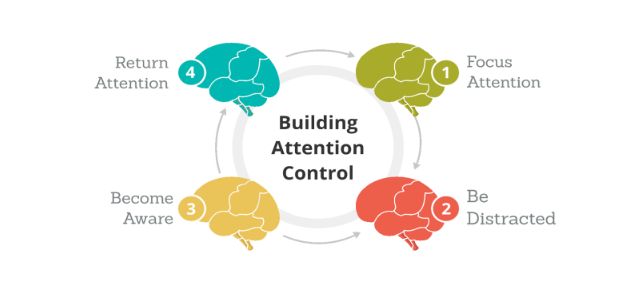
I invite, even encourage, practicing this simple process 3-5 minutes each day, maybe a few times a day. The most common anchor for focusing attention is the breath. Just observe it coming in and going out. And when you lose focus – which is inevitable, so no judgment whatsoever – simply return to observing the anchor, typically your breath, again, and again, and again. In the same way repetition builds physical muscle, it also builds mental capacity.

This practice creates space that allows us to respond rather than simply react. Reaction in physical danger was and is a benefit. Social dangers, however, require response-ability.

I have come to observe just how much US society revolves around an apparent obsession with power. It is craved and otherwise admired, even coveted. So much so that we seem to conflate it with leadership. As in, that person has power, let’s put them in charge! And how’s that worked out for us, ever?

Though power, and the ability to understand and temper it in a variety of forms, is an aspect of leadership, power is not leadership’s equal. And we do a disservice to all involved when anyone promoted is unprepared to wield the power granted. In fact, it would be beneficial if all employees regardless of promotion potential were granted opportunities to develop essential skills often reserved for those who are promoted to positional power:

  • Self-Awareness
  • Emotional Regulation/Intelligence
  • Effective Communication
  • Integrity and Accountability
  • Power Dynamics
  • Adapting to Change
  • and others

Because these are all essential skills to being an effective human not just an effective leader. And since these take time and social interaction to develop, that development needs to start well before, and should be a prerequisite for, promotion. More employees with these skills means better recognition of them which can lead to better workplaces. Plus, being commutable, who doesn’t want better neighborhoods and communities to boot?

Know better. Do better. Be better.

I asked Elicit for Common attributes of leadership discussed. Here’s what came back from the top 8 papers:

A range of studies have identified common attributes of effective leadership. These include the ability to make sense of complex situations and set clear goals (Tait, 1996), sound management skills (Harrison, 1971), exceptional values, communication skills, and trustworthiness (Gaiter, 2013), integration, innovation, importance, intensity, and integrity (Ivey, 2002), vision, self-awareness, and cognitive ability (Ahmed, 2014), integrity, ethical conduct, and self-control (Campbell, 1992), and vision, creativity, goal achievement, confident decision making, and team building (Sarros, 1993). These attributes are crucial for effective leadership across various sectors and organizational levels.

Elicit

Covey popularized the concept to manage things and lead people. Of the above, I identify the following having to do with people:

  • Set clear goals
  • Exceptional values
  • Communication skills
  • Trustworthiness
  • Integrity
  • Self-awareness
  • Ethical conduct
  • Self-control
  • Team building

Of these, I want to draw out the pursuit of self-awareness (because when are we ever fully aware?) fundamental to any of the others. And, according to Ira Chaleff on the subject of followership, what is defined as leadership can in many ways apply to followership, at least when it comes to being effective working with and supporting others. The other observation I want to point out is that, according to the full list of attributes, leadership isn’t just about people. So, I propose that we manage things and develop people – ourselves, others, teams, and whole organizations of them – to be effective with each other. An opportunity available to leaders and followers alike.

Be kind. Bring compassion.

I learned of the Milgram Experiment (https://youtu.be/nexpwnwonRc) in my Research Methods class, and I revisit that learning to this day. Coming out of WWII, the experiment was set up to research obedience. It has been performed many times since, and the outcome continues to be the same. Somewhere around 50% of followers will abdicate responsibility for their actions to authority willing to take that responsibility from them. Why? This remains a question, and one I continue to ponder, along with whether humanity might be able to evolve from it.

Where it made sense, much of my writing through that same education referred to what I call personal or self-leadership. There are many attributes we look for in effective leaders that are important for effective leaders and followers alike:

  • Responsibility
  • Accountability
  • Self-Awareness/Self-Agency
  • Integrity
  • Effective Communication/Feedback

There are others, certainly, but these are a good representation. And, when followers possess these traits, we are better able to hold our leaders accountable, as noted 25 years ago by Ira Chaleff in Courageous Followership: Standing Up to and for Our Leaders. In it, he defines Courageous Followership as follows:

Any organization is a triad consisting of leaders and followers joined in a common purpose. The purpose is the atomic glue that binds us. It gives meaning to our activities. Followers and leaders both orbit around the purpose; followers do not orbit around the leader. Courageous Followership recognizes that to be effective at almost every level of an organization, individuals need to play both the leader and follower role adeptly.

Further, Ira discusses Five Dimensions of Courageous Followership:

  • To Serve
  • To Challenge
  • To Participate in Transformation
  • To Take Moral Action
  • To Speak to Hierarchy

And, how well these concepts align with the self-leadership attributes listed previously:

  • To Serve requires taking Responsibility
  • To Challenge requires an understanding and practice of Accountability of both self and others
  • To Participate in Transformation requires Self-Awareness which leads to the Self-Agency to choose to change
  • To Take Moral Action requires Integrity to Purpose
  • To Speak to the Hierarchy requires effective skill in Communication and providing Feedback

With unemployment trending low for the foreseeable future and many employees seeking new opportunities to better fulfill a need for agency and autonomy to manage our lives across work, family and personal needs, it behooves us as a society to recognize that supporting an evolution to better followership through personal growth opportunities is in our best interest. In so doing, we develop better followers who in turn can better hold leaders accountable to purpose, whether organizational or societal.

As Leaders, we do well to develop and leverage Courageous Followership within our organizations to attract talent as well as define and remain true to organizational purpose. Developed followers could also better contribute to fluid leadership situations like self-managed and -directed teams. Whether stepping into fluid leadership or holding leaders to purpose, better followers make better leaders.

Organization Development (OD) is the scholarship and practice of applied social sciences to cohesive groups of people – organizations, communities, unions and the like. OD professionals tune into and assess an entire social system with an aim to guide and coach it to discover and evolve itself, bringing people-based processes to do so.  To clarify, OD professionals are not hired to fix a system like a doctor or manage it like human resources (HR). We might work with individuals and teams, though usually with ALL of them or those identified as requiring support to fit the organization as it needs and wants to be as a whole.  Those who practice are typically systems thinkers, with a view on how people, process and systems work (or don’t) together. We discover how a system may work against its own interests and support it to evolve to serve those interests instead, not in doing anything to the system but by supporting its development of a more effective way.

We support pursuits like strategy-culture alignment and employee engagement through a variety of aforementioned people processes, including:

  • Strategy development
  • Leadership and management development
  • Team development
  • Coaching and facilitation
  • Conflict resolution
  • Large group interventions
  • Succession planning
  • Talent acquisition, retention and development
  • The list goes on…

…but OD professionals do not typically specialize in a single process. We usually have a capacity for multiple processes. Our specialty is in getting to know the system and what it may need, then figuring out the process to support it through research, drawing from our professional community, and trial and adaptation.

As a coach supports an individual to their own growth and development, so do OD professionals support an organization and all its individuals to its whole growth and development. To do this, we must start by engaging the very top level. If leadership is unwilling to change, there is little hope for the whole system to do so. That is the rub. On the subject of employee engagement, for OD, it isn’t about managing employees to engage; it’s about engaging employees, and we can support leadership and management to develop the capacity to do so effectively. Transformation of an organization requires every single member to develop new capacities. We can support that process, too.

If, as a leader, you are looking to take your organization to a new level or in a different direction, we can support you to evolve your organization, as a whole, to move that way. Call on us via OD professional organizations such as the OD Network or the International Society of Organization and Change as well as higher education such as Benedictine or Case Western Reserve University. You can bring us in as external or internal consultants as we do our best work in autonomy from the system, not tucked in to a department, other than perhaps the C-Suite.

We, Organizational Development professionals, look forward to serving your organization’s strategic development needs.

Be well.

Published September 2019

I caught an interesting article recently on LinkedIn, Power Causes Brain Damage.  It got me pondering and recalling the impact the Milgram Experiment we watched in a Methods of Organizational Research class had on me where I realized our temptation to abdicate personal responsibility when someone will take that mantle from us.  Along with another part of my research on leadership, where I came upon how charismatic leaders can easily take up the responsibility of those in depressed, repressed or oppressed circumstances, it occurs to me that followers have a responsibility in the corruption of power, especially in leadership.

Effective leaders will keep those around them who are able to keep them in check and rooted in reality, even empathy.  Unfortunately, we see too many leaders who are not so effective, right?  Leadership can be isolating unless precautions are taken and that takes awareness.  Awareness takes learning.  Too often, those merely vocationally or academically skilled are promoted without learning how to lead others, let alone themselves.

Then there is the Navigating Conflict workshop I developed and facilitated based on the Peter T. Coleman and Robert Ferguson book, Making Conflict Work.  It reveals how power, relationship and goal compatibility impact how we navigate conflict.  Human sociology is naturally hierarchical, yet as even revealed in the book, we know the effective and compatible use of power when we encounter it.  Don’t we?  If we delineate power along a continuum of self-serving to common good or socially responsible, when those with power start leaning too far into self-serving, as followers, what do we do?  We appease, we submit, we navigate around.  It may work, at least in the short term, but how often do we let it become a long term proposition?  How often do we let the fear of self-serving power go unchecked?  It seems to me that in the face of self-serving power, we reflexively retreat to a follower’s version of it.  Do you witness that?  We retreat into fear and fall into protecting ourselves.  I see this retreat, however naturally human, as abdicating our followers’ version of social responsibility.  It creates an ugly cycle, doesn’t it?

I have long advocated and facilitated the idea of self-leadership being a skill for all to develop – those inclined to follow as well as lead.  It involves developing self-awareness, effective communication and relationship building capabilities, collaboration and teaming savvy, conflict navigation, emotional intelligence, and other ways of being more socially effective.  Anyone can pursue these concepts.  They can be naturally derived from effective family leaders, academic experiences that put us in circumstances that can organically nurture our need to be more effective with others.  Unfortunately, those same self-protective aspects of human nature can play out within those same circumstances, so we all need exposure to more effective and socially responsible ways of being.   This could even be the case for the more vocationally minded, whom we, in the US, have not seen fit to value and support with an educational path.

I see self-leadership as a way to developing better followers, better follower-ship, where we, with care and consideration, keep the powerful, especially those in leadership, in check, even if they haven’t chosen us to do so.

I welcome your thoughts on the matter.  Please chime in!

Most kindly,

~ Jacqueline Gargiulo, MSMOB/MA